Naturschutzorganisation warnt vor immer neuen Eingriffen durch Gletscherschwund – Land Tirol soll Ausnahmen einschränken und verbindliche Ausbaugrenzen festlegen
Bagger am Pitztaler Gletscher: WWF fordert strengeren Gletscherschutz
mehr lesen

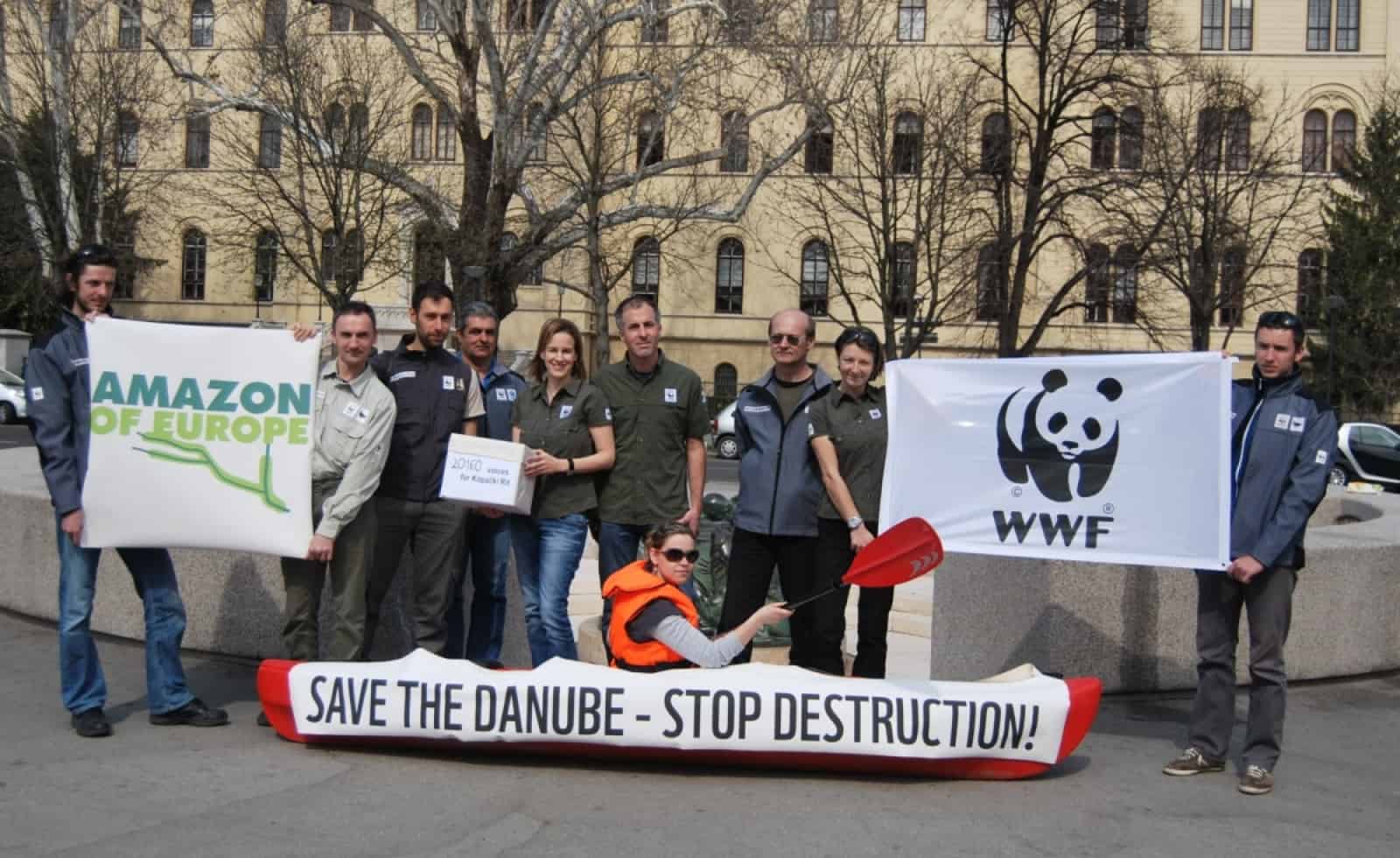
Zagreb, 1. Februar 2012 – Der WWF machte heute mit einer ungewöhnlichen Aktion auf die Bedrohung der kroatischen Flüsse aufmerksam: Sechs Männer in Uniformen mit der Aufschrift "Riverwatch" entrollten ein langes blaues Band auf dem Hauptplatz von Zagreb. Bei den "Riverwatchern" handelt es sich um Freiwillige, Mitglieder von NGOs, die – zu Fuß und in Kanus – Flussabschnitte entlang der Donau, Drau und Mur kontrollieren werden. Im Zuge ihrer Kontrollgänge wollen sie Kanalisierungsmaßnahmen an, sowie Sand- und Kiesbaggerungen aus den Flüssen aufzeigen. Diese Maßnahmen schädigen die natürlichen Flüsse Kroatiens in ihrer ökologischen Intaktheit. Sie widersprechen sowohl dem EU-Recht als auch internationalen Umweltstandards. Der WWF kündigt an, die von den "Riverwatchern" beobachteten Eingriffe in die Flussökosysteme zu prüfen. So sie gesetzwidrig sind, wird die Naturschutzorganisation die kroatische Regierung und die EU-Kommission davon in Kenntnis setzen.
Weitere Informationen siehe die Presseaussendung in Englischer Sprache:
Riverwatchers to protect the “Amazon of Europe”
Zagreb, Croatia, February 1st, 2012 – A long blue band waved by six men wearing uniforms on Zagreb’s central square today marked the start of WWF’s Riverwatch campaign aimed at halting destruction of Croatia’s unique natural rivers: the Danube, Drava and Mura – Europe’s Amazon. All three rivers are under threat from channelling works as well as from gravel and sand extraction. This poses a severe threat to unique wetlands and to Europe’s largest and best preserved floodplain forests.
The Riverwatchers are volunteers who – on canoe and on foot – will patrol a total of 470 km of the rivers for at least the next two years. Riverwatchers will keep an eye not only on the Croatian stretches of the rivers, but also on Hungarian and Serbian shores as these rivers are natural borders between the three countries.
“If we find something inappropriate we will inform the Croatian government as well as the European Commission who like to know if there are activities going on which are not in line with EU law”, said Tibor Mikuska from partner organization Croatian Society for the Protection of Birds and Nature, coordinator of the Riverwatch campaign.
“For the first time in Croatia and in Eastern Europe, a network of people who care about their rivers is taking action”, said Arno Mohl, WWF International Freshwater Expert. “To protect successfully our rivers from destruction, it is key to monitor the situation on the ground regularly and to take action when necessary”, Mohl said.
Devastating actions taken by the water authorities in Croatia as well as in Hungary and Serbia severely harm the three natural rivers and their inhabitants. The area is home to the highest density in Europe of breeding pairs of White-tailed eagle and endangered species such as the Little tern, Black stork and Ship sturgeon. It is also an important stepping stone for more than 250,000 migratory waterfowls every year. The survival of these vulnerable species depends on preserving intact the “Amazon of Europe”.
In December 2011 Croatia signed the EU Accession treaty to become an EU member in 2013. This obliges Croatia to comply with EU law and to protect its unique natural rivers. In September 2011, the Danube, Drava and Mura riverine area was nominated to become part of a 5-country Transboundary UNESCO Biosphere Reserve together with Austria, Hungary, Serbia and Slovenia.
The Riverwatch campaign is being implemented in partnership with a wide range of local NGOs.
Contact:
Olga Apostolova, Regional Communications Officer, WWF Danube Carpathian Programme,
Tel. +359 885 727 862, E-Mail: oapostolova@wwfdcp.bg
Claudia Mohl, Press Officer WWF Austria, Tel. +43 1 488 17-250, E-Mail: claudia.mohl@wwf.at

Im WWF-Newsletter informieren wir Sie laufend über aktuelle Projekte und Erfolge: Hier bestellen!
Naturschutzorganisation warnt vor immer neuen Eingriffen durch Gletscherschwund – Land Tirol soll Ausnahmen einschränken und verbindliche Ausbaugrenzen festlegen
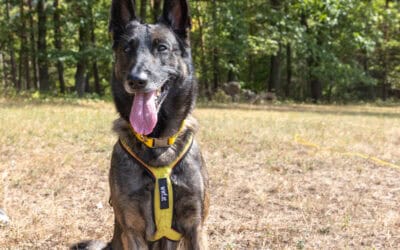
Der 5-jährige Rüde hilft mit seiner Spürnase dabei, Fälle von Wildtierkriminalität aufzudecken. Er gilt als besonders ausgeglichen und arbeitsfreudig.
Schäferhund-Mischling unterstützt Polizei-Ermittlungen durch Suche nach Tierkadavern und Giftködern – Einsätze vor allem in Niederösterreich, Oberösterreich und der Steiermark
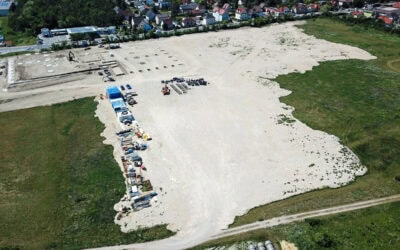
Bodenschutz bei Betriebsgebieten: Alle neun Bundesländer fallen im WWF-Check durch – Täglich fast zwei Fußballfelder zusätzlich beansprucht – WWF fordert Ende des Wildwuchses – LÄNDER-ZEUGNIS im Detail
Globale Halbzeitbilanz zeigt unzureichende Umsetzung – WWF fordert wirksame Maßnahmen und gesicherte Finanzierung, auch in Österreich – COP17-Konferenz startet am Montag

Umweltschutzorganisation verlangt verbindliches Klimagesetz und wirksamen Renaturierungsplan – Natürliche Schutzmaßnahmen stärken, fossile Großprojekte stoppen
Umweltschutzorganisation bewertet Regierungspaket als „sinnvollen, aber zu schwachen Impuls“ – WWF fordert mehrjährige Sanierungsförderung und verbindlichen Zeitplan für fossilen Heizungsausstieg
Zum Ende der Begutachtung: Zentrale Maßnahmen fehlen, Finanzierung ungeklärt – Weitreichende Ausnahmen bei Stadtbegrünung – WWF fordert grundlegende Überarbeitung
14 Städte untersucht: Planungslücken bei Maßnahmen, Finanzierung und Erfolgskontrolle – WWF fordert langfristige Begrünungsplanung und mehr Unterstützung durch Bund und Länder
