
Woran ist die Amur-Tigerin nur gestorben?
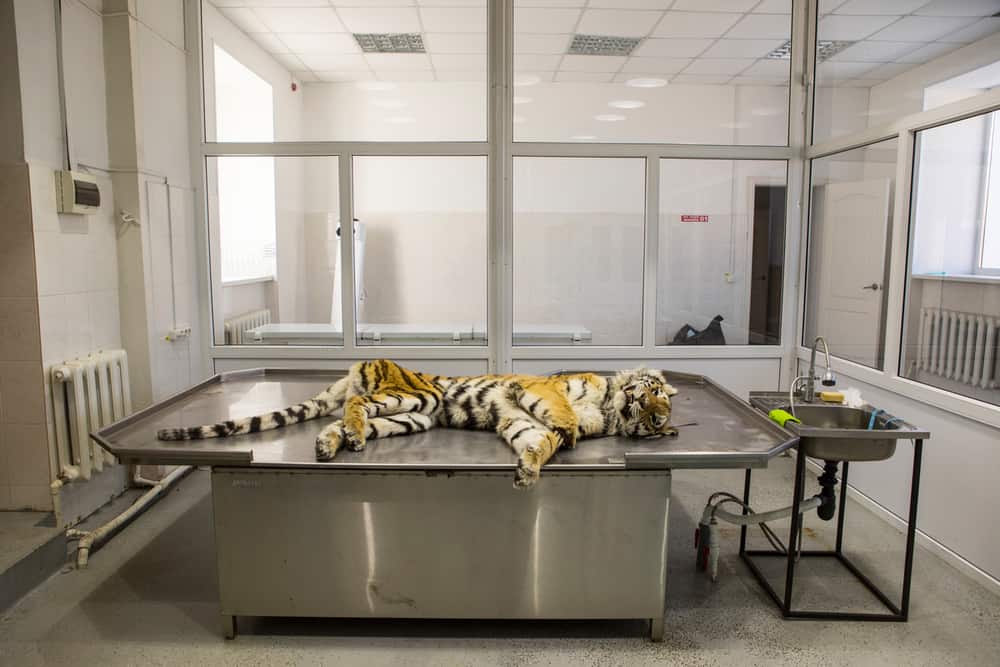
Deceased female tiger at the Animal Diseases Diagnostics center, Ussuriysk. Tigress believed to have died of starvation after her paw was damaged by a snare.
The Amur branch of WWF-Russia works to protect the Amur tiger in the landscape of the Russian Far East. The landscape, which includes vast areas of valuable temperate forest, is currently home to approximately 425-440 adult tigers (c.2016). Illegal logging, poaching, and a decline in the number of ungulates that are the predator’s primary prey, are all factors that today threaten the survival of the Amur tiger in the wild.
Pavel Fomenko, or ‘Pasha’ to his friends, leads the species programs for WWF-Russia’s Amur branch. Pavel, once a hunter knows the forest inside out. That’s why, in 1994, WWF invited him to join the team. He is now known nationwide for his efforts to protect the endangered Amur tiger.
Today, he oversees a complex system of species protection, in collaboration with state authorities: tracking poachers, developing links with hunting lodges, setting up camera traps as well as forensics and examinations on animal remains for research and criminal (poaching) investigations.
In collaboration with the Animal Diseases Diagnostics center in Ussuriysk, Pavel and additional WWF staff members carry out forensic and diagnostics work on wildlife that have died either through natural causes, or to investigate possible criminal cases. By conducting forensic work, Pavel and his team are able to provide evidence that can be used to prosecute individuals involved in tiger poaching.
From January to July 2016, over seventy post-mortem and forensic-biological examinations were conducted jointly with the staff of the Animal Diseases Diagnostic Centre. WWF experts provided forensic and biological expertise for six cases – three involving tigers – and two investigations into criminal cases including one killed tiger.
Images taken for WWF UK commission: ‘I Protect Tigers Campaign’.