Der 5-jährige Rüde hilft mit seiner Spürnase dabei, Fälle von Wildtierkriminalität aufzudecken. Er gilt als besonders ausgeglichen und arbeitsfreudig.

Good News: Finn ist neuer WWF-Naturschutzhund
mehr lesen


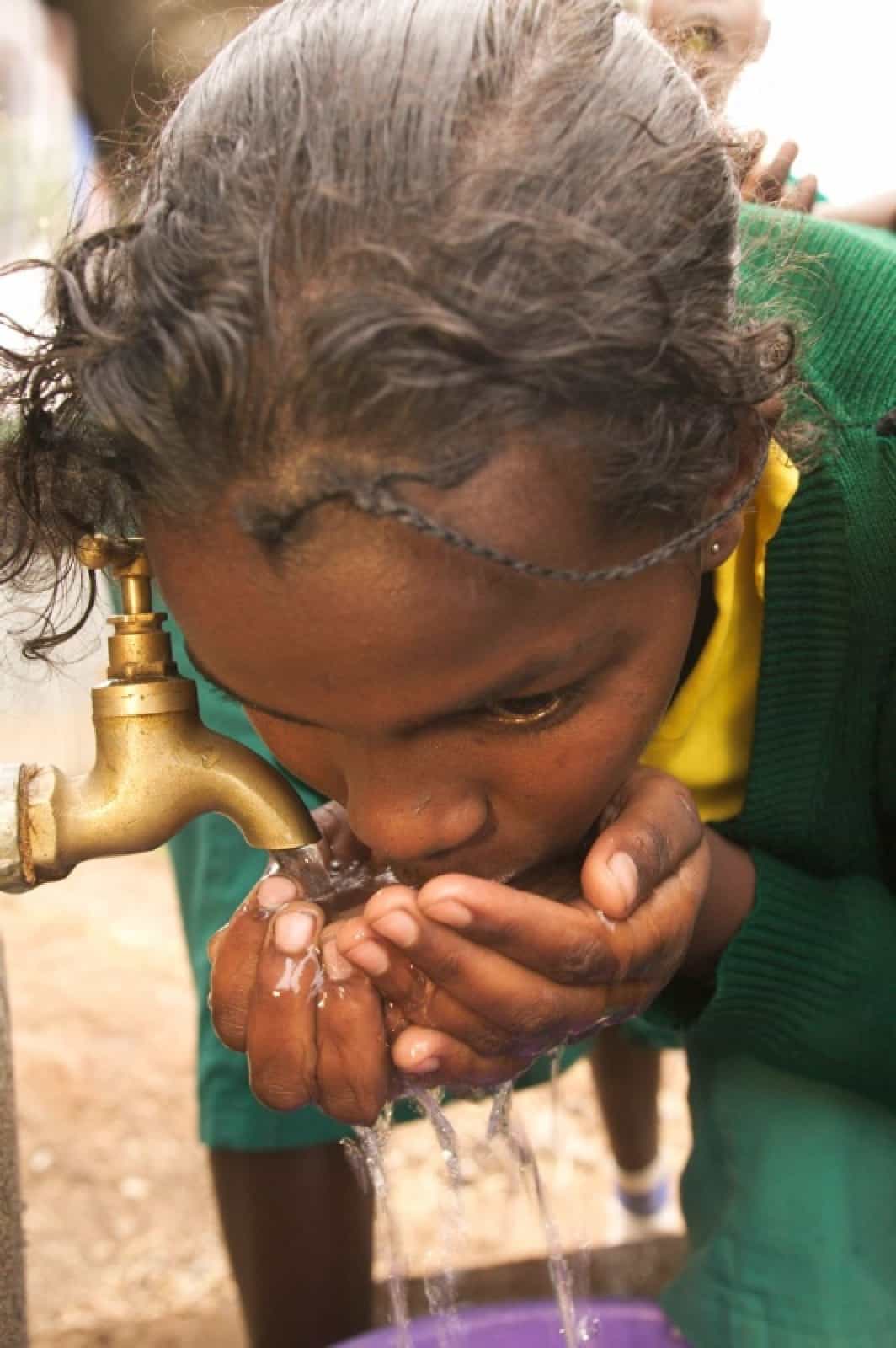
Tripura, Indien, 2. Oktober 2007 – Mit einer optimierten Methode für den Reisanbau können Millarden Liter Wasser gespart werden, und zugleich die Produktion erheblich gesteigert werden. Die Methode wurde bereits in 28 Ländern erfolgreich getestet. Der WWF empfiehlt Indien, China und Indonesien eine teilweise Umstellung bis zum Jahr 2025.
With a focus on India – a country which faces a major water crisis, yet has the world’s largest rice cultivated area – the study found that the system of rice intensification (SRI) method has helped increase yields by over 30 per cent – four to five tonnes per hectare instead of three tonnes per hectare – while using 40 per cent less water than conventional methods.
The system is based on eight principles which are different to conventional rice cultivation. They include developing nutrient-rich and un-flooded nurseries instead of flooded ones; ensuring wider spacing between the seedlings; preferring composts or farmyard manure to synthetic fertilizers; and managing water carefully to avoid that the plants’ roots are not saturated.
The method was initially developed in the 1980s in Madagascar and has been demonstrated to be effective in 28 countries.
“Although the system of rice intensification has shown its advantages, the scale of its use leaves much to be desired,” said Dr Biksham Gujja, Senior Policy Adviser at WWF International. It is time to start large-scale programmes to support a method that could make a lasting global impact with far-reaching benefits to people and nature.”
The report suggests that major rice-producing countries such as India, China and Indonesia should convert at least 25 per cent of their current rice cultivation to the new system by 2025. This would not only massively reduce the use of water but also help ensure food security. In addition, this will reduce significant amount of methane emissions, since SRI fields do not emit methane as it is the case for conventional system.
For example, if the SRI method was applied in 20 million hectares of land under rice cultivation in India, the country could meet its food grain objectives of 220 million tonnes of grain by 2012 instead of 2050.
Authorities in the Indian state of Tripura have already committed to move in that direction.
“Our farmers proved that the system of rice intensification improves productivity and we will convert at least 40 per cent of our rice cultivation using this method over the next five years,” said Manik Sarkar, Chief Minister of Tripura State. “We urge this as a model for rice cultivation elsewhere as it represents one hope for the water crisis affecting so many billions of people.”
Demand for a water-intensive crop such as rice is expected to increase by 38 per cent by 2040, deepening the water crisis during the same time. However, less than 6 per cent of rice is traded internationally and savings in water have potential for mitigating domestic water conflicts, especially in poor, rural areas where water is scarce.
Already 1.2 billion people have no access to adequate water for drinking and hygiene. WWF is focusing on sustainable agriculture efforts for cotton, sugar and rice, some of the most consuming crops for which alternative techniques can result in a strong yield and water savings.
For further information:
Lisa Hadeed, WWF Global Freshwater Programme, t +41 22 364 9030, e lhadeed@wwfint.org.
Brian Thomson, Press Officer, WWF International, t +41 22 364 9562, e bthomson@wwfint.org



Im WWF-Newsletter informieren wir Sie laufend über aktuelle Projekte und Erfolge: Hier bestellen!
Der 5-jährige Rüde hilft mit seiner Spürnase dabei, Fälle von Wildtierkriminalität aufzudecken. Er gilt als besonders ausgeglichen und arbeitsfreudig.
Schäferhund-Mischling unterstützt Polizei-Ermittlungen durch Suche nach Tierkadavern und Giftködern – Einsätze vor allem in Niederösterreich, Oberösterreich und der Steiermark
Bodenschutz bei Betriebsgebieten: Alle neun Bundesländer fallen im WWF-Check durch – Täglich fast zwei Fußballfelder zusätzlich beansprucht – WWF fordert Ende des Wildwuchses – LÄNDER-ZEUGNIS im Detail

Globale Halbzeitbilanz zeigt unzureichende Umsetzung – WWF fordert wirksame Maßnahmen und gesicherte Finanzierung, auch in Österreich – COP17-Konferenz startet am Montag

Umweltschutzorganisation verlangt verbindliches Klimagesetz und wirksamen Renaturierungsplan – Natürliche Schutzmaßnahmen stärken, fossile Großprojekte stoppen

Umweltschutzorganisation bewertet Regierungspaket als „sinnvollen, aber zu schwachen Impuls“ – WWF fordert mehrjährige Sanierungsförderung und verbindlichen Zeitplan für fossilen Heizungsausstieg

Zum Ende der Begutachtung: Zentrale Maßnahmen fehlen, Finanzierung ungeklärt – Weitreichende Ausnahmen bei Stadtbegrünung – WWF fordert grundlegende Überarbeitung

14 Städte untersucht: Planungslücken bei Maßnahmen, Finanzierung und Erfolgskontrolle – WWF fordert langfristige Begrünungsplanung und mehr Unterstützung durch Bund und Länder

Erfasste Populationen seit 1970 um durchschnittlich 73 Prozent geschrumpft – Lebensraumzerstörung größte Bedrohung – Schutzmaßnahmen ermöglichen Erholung einzelner Arten + BILDER und VIDEOS